
Pipe Sleeve Seals

Pipe Sleeve Seals
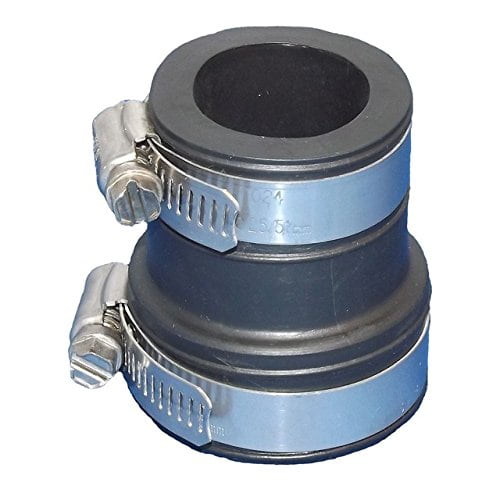
Close the gap where a pipe runs through a sleeve in a foundation wall. A Fernco reducing coupling clamps over the end of the sleeve and onto the pipe to close the gap, so soil and water don’t have an open path in along the pipe. Two clamps and a nut driver.
A sleeve protects the pipe. The gap still needs closing.
Where a pipe passes through a foundation wall, plumbing codes typically call for a sleeve: a short piece of larger pipe set in the wall, so the wall can’t bear down on the pipe if the building settles. The model code sizes it two pipe sizes larger than the pipe (IPC 305.3) and requires the gap between them to be sealed in an approved manner with caulking, foam sealant or a gasketing system (IPC 315.1). A clamped Fernco coupling can serve as that gasketing system where your inspector accepts it.
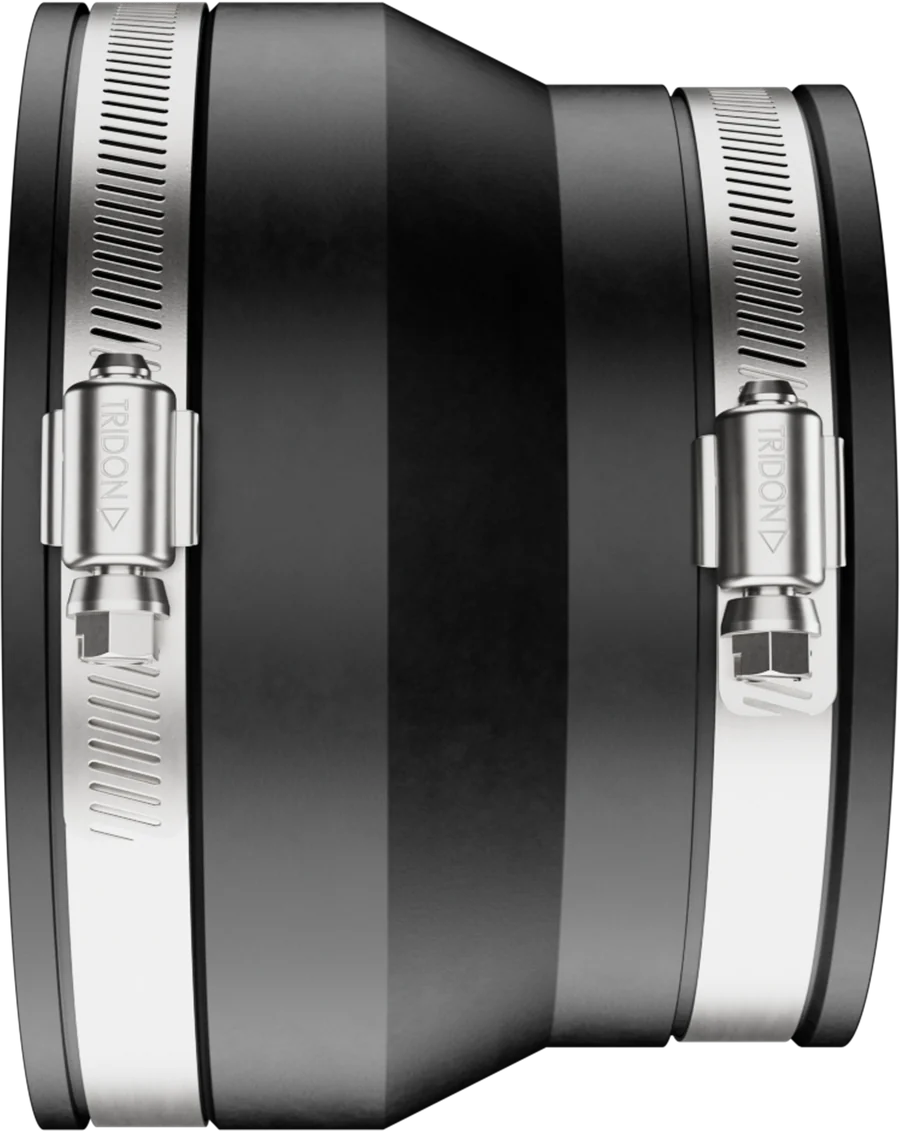
Seals the gap
One clamp on the sleeve, one on the pipe. The gap is closed at the end of the sleeve.
Moves with it
Flexible PVC, not cement or foam, so the seal takes the small movement a sleeve is there to allow.
Done in minutes
Slide it on, push it over the sleeve, tighten two clamps. Nothing to mix, nothing to wait on.
Comes back off
Loosen the clamps and slide it back. Nothing to chip out if the line ever needs work.
Please check with your local inspector to confirm a coupling is an approved sleeve seal in your area.
Cutaway of a 4″ pipe through a 6″ sleeve in a 10″ foundation wall, sealed with a 1056-64 on each end. Drawn to scale.
Big end on the sleeve. Small end on the pipe.
A reducing coupling is sized for two different outside diameters. Here the larger one is the sleeve and the smaller one is the pipe running through it.
- The sleeve sticks out at least 1″ past the wall, so the coupling has something to clamp to.
- The pipe runs through the sleeve unchanged. It’s the same pipe on both sides of the wall.
- One on each side is common practice: outside to keep soil and water out, inside to finish the basement side.
- Sleeve to wall is sealed separately, when the sleeve is cast in or grouted.
Find your size.
Choose your sleeve and the pipe going through it. Or measure both outside diameters and type them in.
Measure outside diameters in inches. No calipers? Wrap a tape around the pipe and divide by 3.14.
Choose a sleeve and a pipe, and your part number shows here.
| Part | Common setup | Sleeve end O.D. | Pipe end O.D. |
|---|---|---|---|
| 1056-64 | 4″ sewer or drain in a 6″ sleeve | 6.25–6.85″ | 4.10–4.60″ |
| 1056-43 | 3″ pipe in a 4″ sleeve | 4.25–4.65″ | 3.25–3.65″ |
| 1056-42 | 2″ pipe in a 4″ sleeve | 4.00–4.50″ | 2.25–2.50″ |
| 1056-415 | 1½″ pipe in a 4″ sleeve | 4.00–4.50″ | 1.75–1.95″ |
| 1056-32 | 2″ pipe in a 3″ sleeve | 3.15–3.65″ | 2.20–2.50″ |
| 1056-315 | 1½″ pipe in a 3″ sleeve | 3.15–3.50″ | 1.65–1.95″ |
| 1056-250/150 | 1½″ pipe in a 2½″ sleeve | 2.50–3.10″ | 1.65–2.00″ |
| DTC-210* | ¾″ or 1″ plastic, or 1″ copper, in a 2″ sleeve | 2.35–2.38″ | 1.05–1.32″ |
| DTC-110* | ¾″ or 1″ plastic, or 1″ copper, in a 1½″ sleeve | 1.90″ | 1.05–1.32″ |
*DTC-110 and DTC-210 are shown with the O.D.s of the pipe they fit. Pipe O.D.s used in the finder: Schedule 40 PVC, ABS and steel (IPS), copper (CTS), no-hub cast iron (CISPI 301) and SDR-35 sewer pipe (ASTM D3034). Part numbers link to dimensional drawings.
Four steps.
- Set the sleeveSize it per local code, typically at least two pipe sizes larger than the pipe. Leave at least 1″ sticking out past each face of the wall.
- Slide the coupling on firstPut it on a free end of the pipe before the pipe is joined, big end toward the wall. It won’t go on a pipe that’s already connected at both ends.
- Clamp the sleevePush the big end all the way over the end of the sleeve and tighten its clamp to 60 in-lb.
- Clamp the pipeCenter the pipe in the sleeve and tighten the small-end clamp to 60 in-lb. Repeat on the other side of the wall.
Where it fits, and where it doesn’t.
Recommended for
- Sewer, drain and vent pipe through basement and foundation walls
- ¾″ and 1″ plastic, or 1″ copper, in a 1½″ or 2″ sleeve
- New construction, where the sleeve is set with enough sticking out
- Replacing a line, when the pipe end is free to slide the coupling on
Not recommended for
- Sleeves set flush with the wall, with nothing to clamp to
- Existing continuous pipe that can’t be cut or disconnected
- High water tables, or specs that call for a rated hydrostatic sleeve seal
- Fire-rated walls and floors, which need a listed firestop system
Specifications.
| Product | Fernco 1056 series reducing couplings and Drain & Trap Connectors (DTC-110, DTC-210), used as sleeve seals |
| Body | Flexible PVC |
| Clamps | 300 series stainless steel, two per coupling |
| Installation torque | 60 in-lb |
| Temperature | −30°F to 140°F intermittent, 120°F continuous |
| Standards | Couplings comply with ASTM D5926, C1173 and CSA B602 |
| Maximum test pressure | 4.3 psi, as a pipe coupling. Not rated as a hydrostatic sleeve seal. The pipe carries any line pressure, not the coupling. |
| Made in | USA. AIS and BABA compliant. |
Documents.
The catalog page and a dimensional drawing for each coupling.
 Fernco Plumbing CatalogCatalog · page 15View catalog
 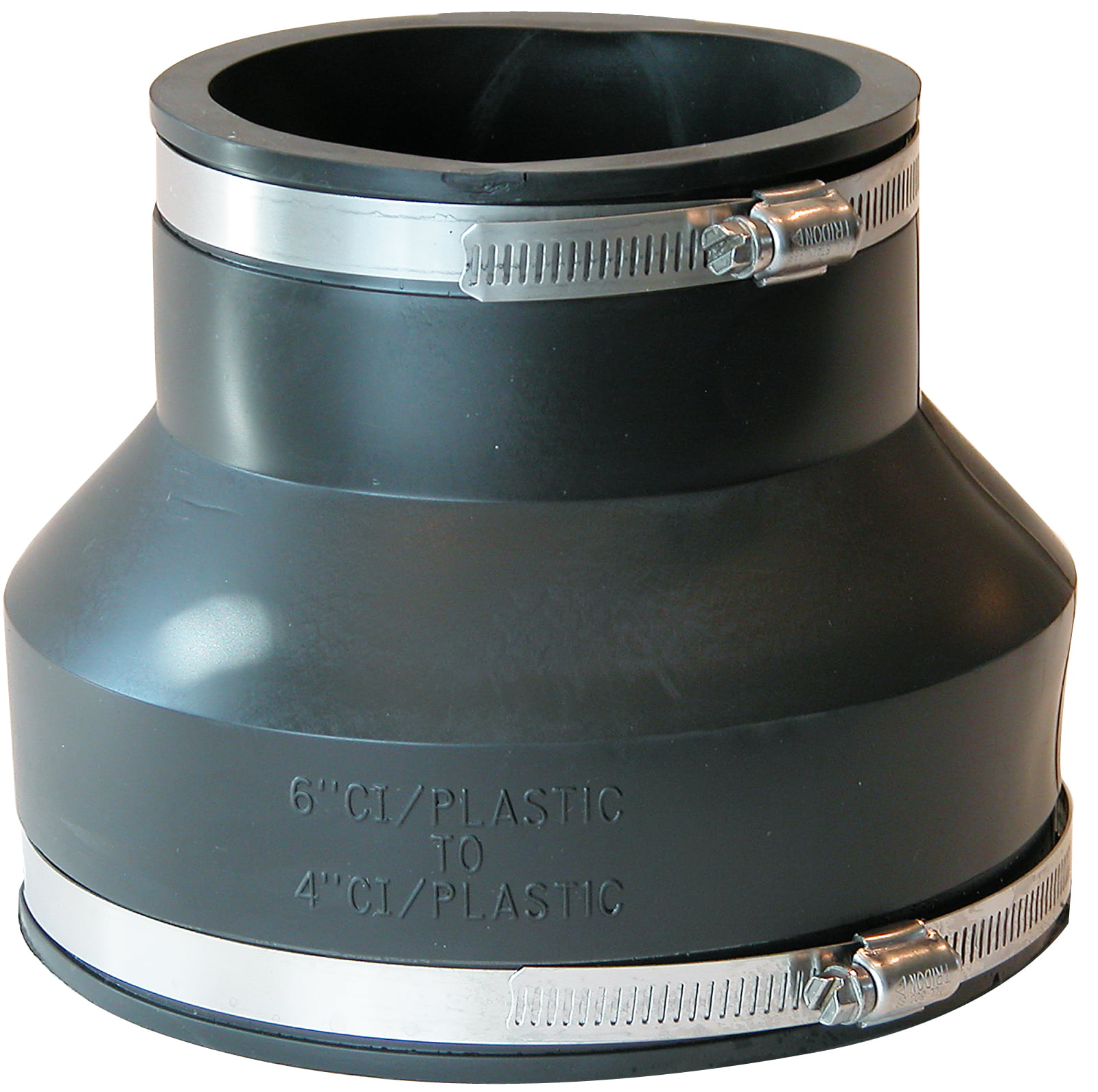 1056-64Dimensional drawing · 4″ sewer or drain in a 6″ sleeveView drawing
 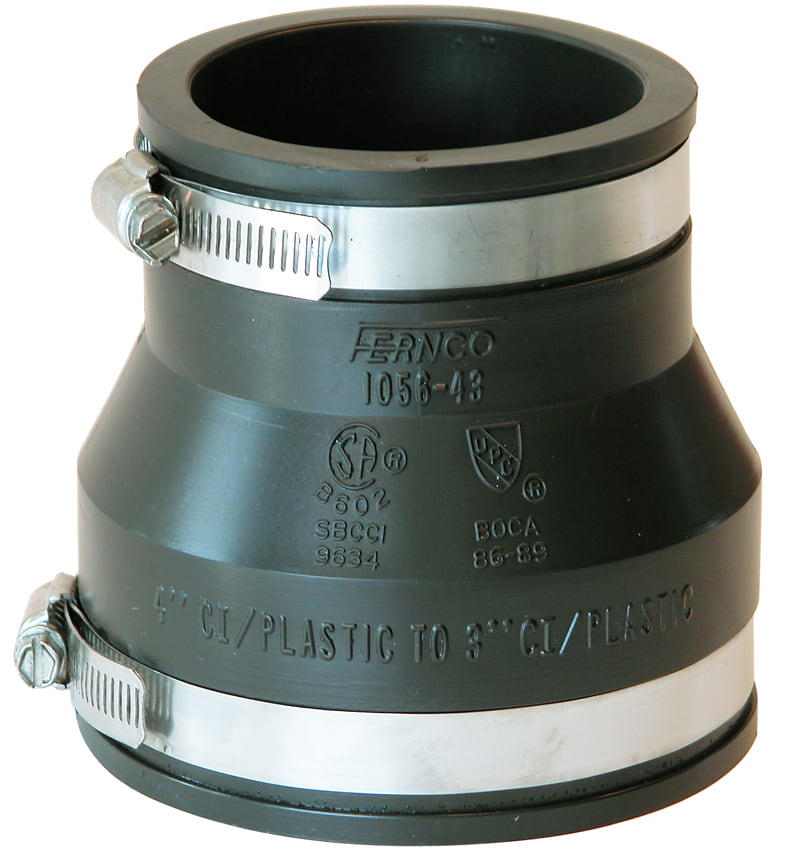 1056-43Dimensional drawing · 3″ pipe in a 4″ sleeveView drawing
 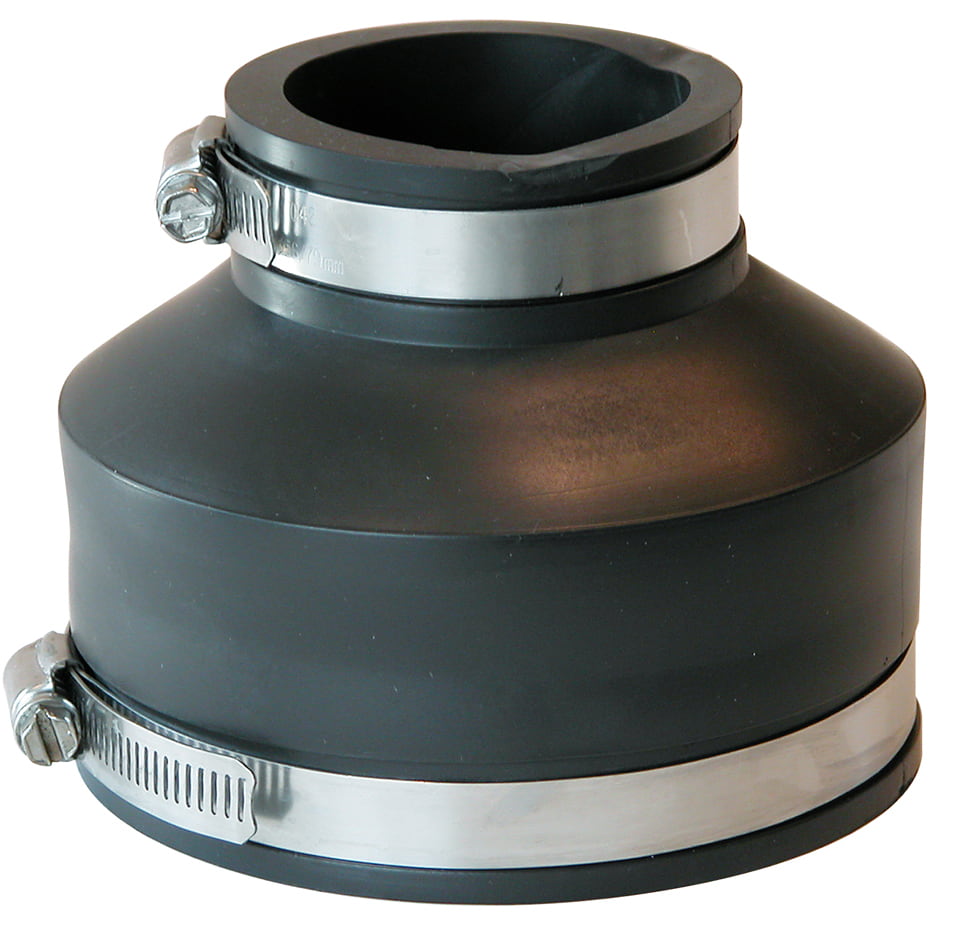 1056-42Dimensional drawing · 2″ pipe in a 4″ sleeveView drawing
 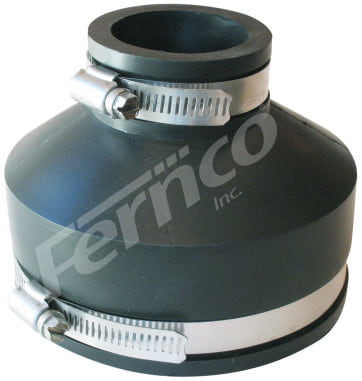 1056-415Dimensional drawing · 1½″ pipe in a 4″ sleeveView drawing
 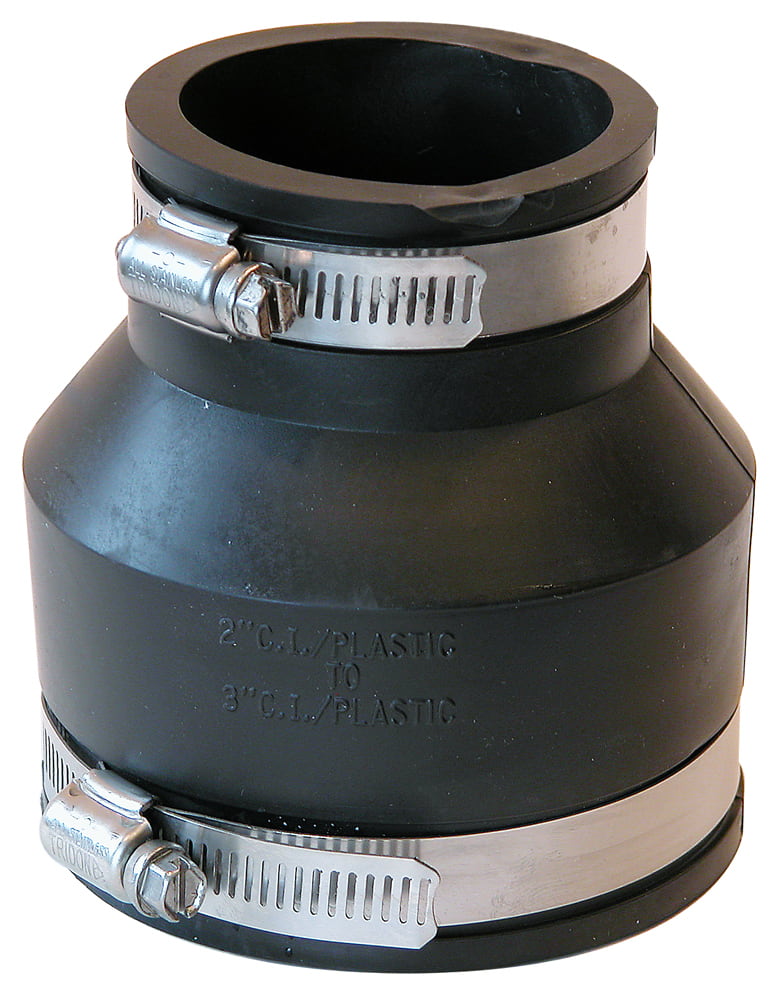 1056-32Dimensional drawing · 2″ pipe in a 3″ sleeveView drawing
 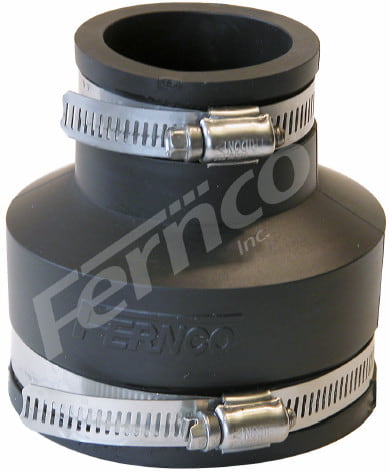 1056-315Dimensional drawing · 1½″ pipe in a 3″ sleeveView drawing
 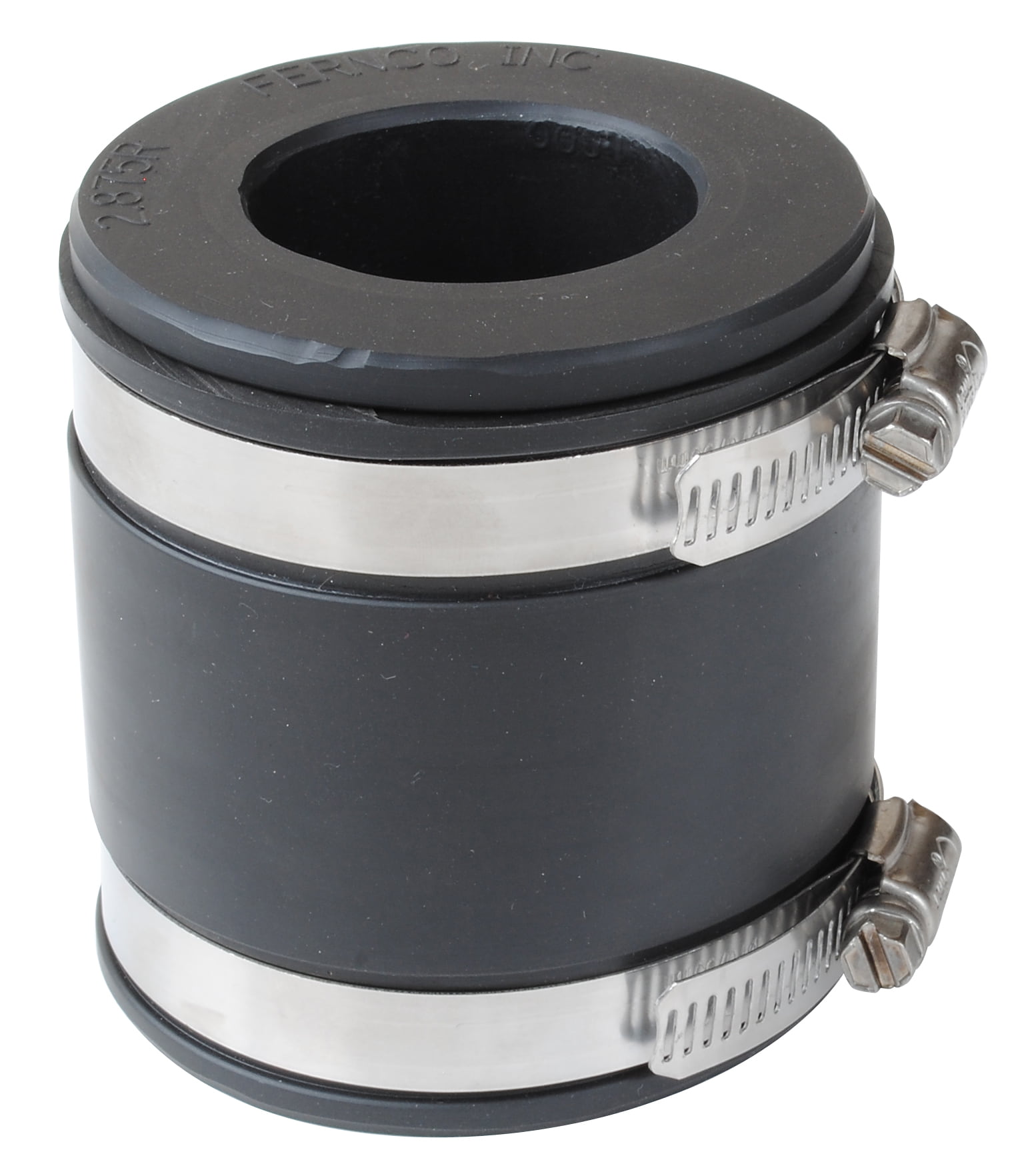 1056-250/150Dimensional drawing · 1½″ pipe in a 2½″ sleeveView drawing DTC-210DTC-210Dimensional drawing · ¾″ or 1″ plastic, or 1″ copper, in a 2″ sleeveView drawing
  DTC-110Dimensional drawing · ¾″ or 1″ plastic, or 1″ copper, in a 1½″ sleeveView drawing
Frequently asked questions.
Do I need a sleeve where a pipe goes through my foundation?
Usually, yes. The model plumbing code calls for either a relieving arch or a sleeve two pipe sizes larger than the pipe where a pipe passes through a foundation wall (IPC 305.3). Local codes vary, so check with your inspector.
Is a coupling an approved way to seal the sleeve?
The model code says the space between the pipe and the sleeve is sealed in an approved manner with caulking, foam sealant or a gasketing system (IPC 315.1). A clamped coupling can qualify as a gasketing system. Your local inspector makes the final call.
Can I put it on without cutting my pipe?
No. The coupling is a solid ring, so it has to slide on from a free end of the pipe. On new work, put it on before the pipe is joined. On an existing line you’d need to open the line to fit it.
What about a ¾″ or 1″ pipe?
Use a DTC-110 in a 1½″ sleeve or a DTC-210 in a 2″ sleeve. Both fit ¾″ or 1″ plastic pipe in IPS sizes (1.05″ to 1.32″ O.D.), or 1″ copper.
Will it work on copper?
In 1″, the DTC-110 and DTC-210 fit 1″ copper. Most larger copper sizes are smaller on the outside than plastic or cast iron of the same size, so they fall below these couplings’ pipe-end ranges. Measure the O.D. and use the finder.
How much groundwater will it hold back?
The couplings are rated for gravity drain lines, with a maximum test pressure of 4.3 psi, and haven’t been rated as a hydrostatic sleeve seal. Where the water table is high or the spec calls for a rated sleeve seal, use one.
My sleeve is flush with the wall. What now?
The coupling needs at least 1″ of sleeve to clamp to. If the sleeve doesn’t stick out, a coupling won’t work; use a seal made to fit inside the gap instead.