

By now you have almost certainly heard about it. The 2026 cyclosporiasis outbreak has been all over the news, with more than 4,000 people in at least 32 states sick from a nasty little parasite called Cyclospora cayetanensis. Investigators are looking hard at lettuce and salad greens, nobody has pinned down a single grower or supplier yet, and the numbers keep climbing.
Most of the coverage stops right there, at the produce aisle. Wash your berries, scrub your tomatoes, avoid pre-bagged lettuce. Good advice, as far as it goes. But there is a bigger story sitting underneath it, and it runs straight through the pipes buried under our streets, our farms, and our buildings.
A Parasite That Has to Spend Time in the Environment
Here is the part of cyclospora that should make a pipe company sit up.
Unlike most stomach bugs, cyclospora can’t spread straight from one person to the next. When it leaves the body in human waste, it isn’t infectious yet. It has to sit out in the world, in sewage, water, or soil, for a week or two before it is ready to make anyone else sick.
Sit with that for a second, because it is the whole ballgame. This is a parasite whose entire life cycle depends on human waste getting out into the environment and mixing with water and soil. It starts in feces, it grows up in the wet outdoors, and it hitches a ride back to us on water or on food grown with that water. The environment isn’t a bit player here. It is the main stage.
And it is a tough customer. Cyclospora shrugs off chlorine. The disinfectant that guards most of our drinking water doesn’t reliably kill it, which is exactly why the pros count on more than one barrier instead of trusting chlorine alone. Bottom line: keeping this thing out of the water beats trying to kill it once it is already in there.
Even the “Foodborne” Outbreaks Trace Back to Water
Here is the thing. The produce story and the water story aren’t two different stories. They are the same one.
Fresh fruits and veggies usually pick up cyclospora from water in the first place. Irrigation water, wash water, processing water carrying human waste, that is a well-documented path onto the stuff we eat raw. So even when the headline blames the lettuce, that lettuce very likely got contaminated because clean water and waste water weren’t kept apart somewhere upstream.
Straight-up waterborne cases are on the record too. Back in 1992 in Pokhara, Nepal, cyclospora showed up in drinking water for the first time, a mix of river and municipal supply. One of the earliest U.S. clusters, hospital staff in Chicago in 1990, got traced to tap water that had likely picked up contamination from stagnant water in a rooftop tank. To be fair about it, most U.S. cyclospora outbreaks since the ’90s have been tied to imported produce, not to municipal tap water. There is no confirmed recent case of an American utility piping cyclospora into people’s homes. But this bug is a clean, uncomfortable reminder of something that is true for a whole lineup of pathogens: when human waste and clean water end up sharing space, people get sick.
The Barrier We’re Letting Erode
The whole system rests on one thing, keeping the water we drink physically separate from the water we flush. Two sets of pipes, running near each other underground, that are never supposed to meet. It only works as long as both sets stay in one piece.
In its 2025 Infrastructure Report Card, the American Society of Civil Engineers handed U.S. drinking water a C-minus, wastewater a D-plus, and stormwater a D. Not one of those grades budged from 2021. And nearly 20 percent of the nation’s water mains have already outlived their useful lives and are still sitting in the ground waiting to be replaced, even though these pipes were only built to last 75 to 100 years in the first place.
America’s water infrastructure, by the numbers
- Drinking water: C-minus | Wastewater: D-plus | Stormwater: D (ASCE, 2025)
- 240,000 water main breaks every year
- ~6 billion gallons of treated drinking water lost every day, roughly 14 to 18 percent of what utilities produce
- ~900 billion gallons of untreated sewage discharged into U.S. waterways each year
- $99 billion annual water infrastructure funding gap
How a Cracked Pipe Becomes a Health Problem
It is easy to look at a leaking underground pipe and shrug it off, figuring it is fine as long as the waste water is basically heading away from the building. Out of sight, out of mind. But once you know how contamination actually happens, that shrug doesn’t hold up.
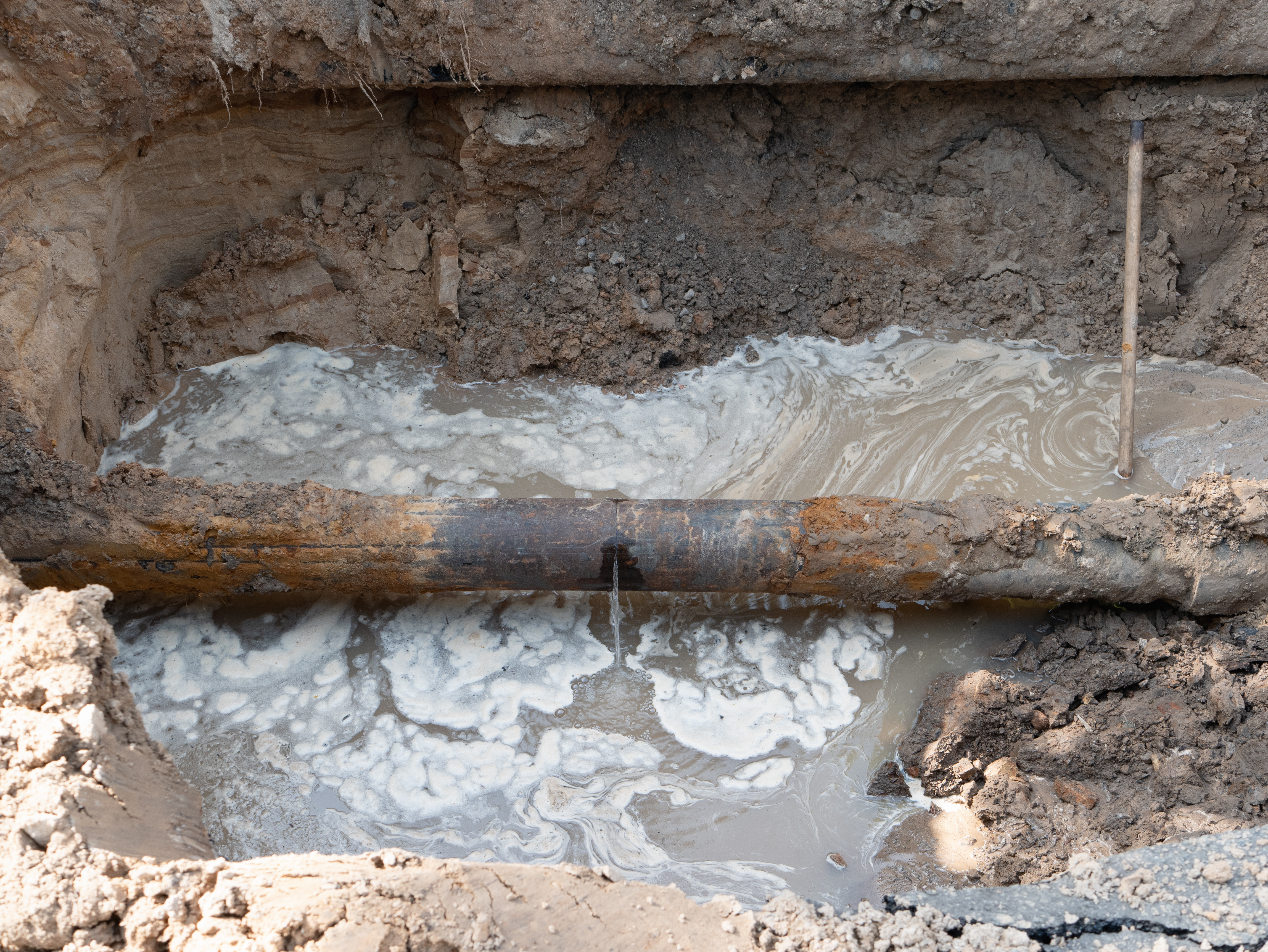
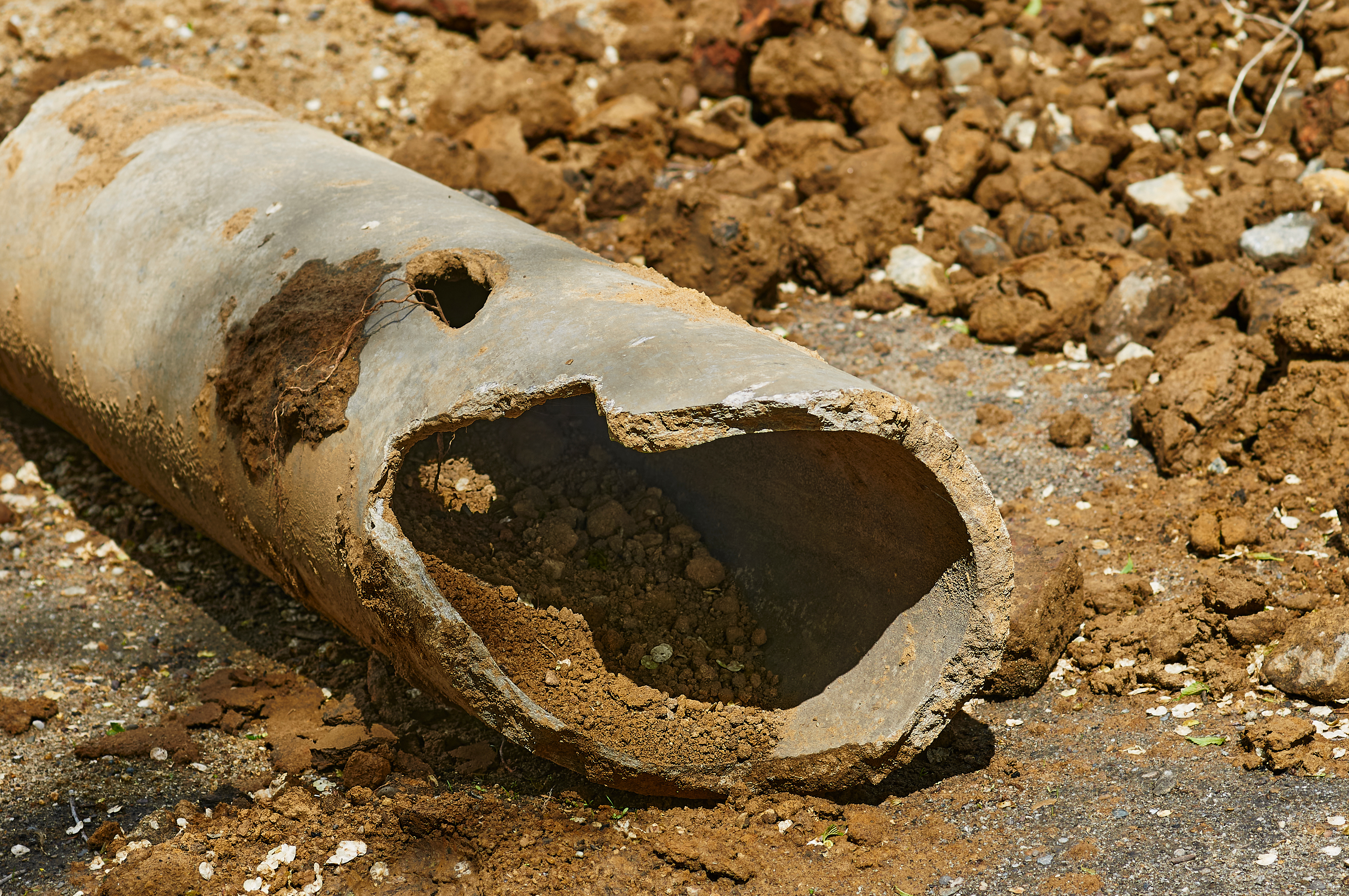
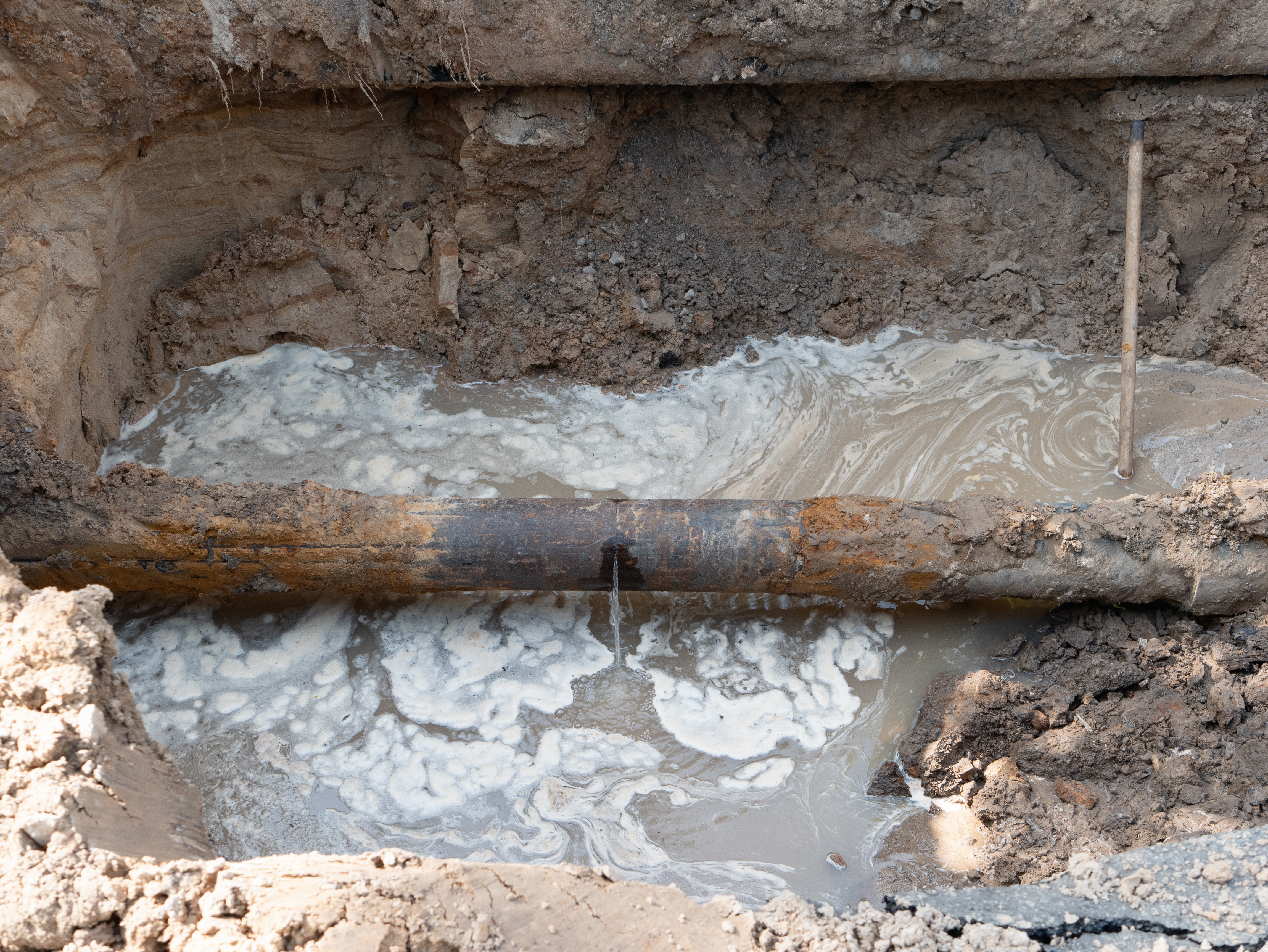
When a sewer pipe cracks or a joint lets go, the waste water doesn’t just politely head downstream. Some of it leaks out into the surrounding dirt, a process called exfiltration, and studies put the leak rate anywhere from 1 to more than 13 percent of dry-weather flow. That sewage soaks into shallow groundwater, which in plenty of communities is the very same groundwater feeding the drinking supply.
The reverse is just as ugly. Drinking water mains run under pressure, which usually keeps the bad stuff out. But when a main breaks, a pump quits, or demand spikes, that pressure can dip or even go negative for a moment. If there is a leak in the water pipe and a leaking sewer sitting nearby, that pressure drop can actually pull the contaminated water in through the gap. It is called intrusion, and it turns a nearby sewage leak into a drinking water problem in a matter of seconds. Cross-connections, where waste and potable lines get joined when they never should be, do the same thing on a more permanent basis.
In every one of these failures, the breach happens somewhere specific: a cracked wall, a blown joint, a bad connection. The barrier between clean and dirty water isn’t some abstract policy. It is physical, and it lives right at the seams.
The Boil-Water Notice and the Well Nobody Watches
You have probably run into the first half of this already. When a water main breaks in your town, or the utility shuts a line down to fix one, you get a boil-water notice. That is not just red tape. When the system loses pressure, the same thing we just described can happen: contaminants get drawn in through the break. So the utility tells everyone to boil their water, then pulls samples and keeps the advisory in place until the tests come back clean. In other words, the boil notice is the water system openly admitting, in real time, that the barrier may have been breached. For what it is worth, boiling knocks out cyclospora too, since heat kills it, even though these notices are usually triggered by bacteria.
The people with the most exposure and the least protection are private well owners. If you are one of the roughly 43 million Americans, about 15 percent of us, who get their water from a private well, you are drawing straight from the same shallow groundwater that a leaking sewer or a failing septic system can seep into. And here is the part a lot of people do not realize: private wells are not covered by the Safe Drinking Water Act. No utility is testing your water, nobody is sending you a boil notice, and a USGS study found that about one in five private wells contained a contaminant above a human-health benchmark. Testing and treatment fall entirely on the homeowner, which is exactly why keeping waste water contained at the source matters even more once you are out past the city mains.
Where Fernco Fits
This is the quiet, unglamorous work that keeps a parasite in the soil from turning into a parasite in somebody’s kitchen faucet. Every solid pipe joint, every properly sealed coupling, every repair that brings a line back to full integrity is one more spot where the two water systems stay separate the way they are supposed to.
Odds are cyclospora won’t get traced to an American waste water pipe. The lettuce will take the blame, and it might earn it. But the deeper lesson of this parasite, a bug that has to travel itself through waste and water just to survive, is that the line between clean and contaminated is thinner than we would like to believe. And it is only as strong as the pipes and joints holding it together.
Keeping fresh water fresh and waste water where it belongs isn’t a maintenance footnote. It is public health infrastructure, one connection at a time.
The barrier between clean and contaminated water is only as strong as the joints and pipes holding it in place, which is exactly the work Fernco has been built around for decades. To learn more about Fernco flexible pipe couplings, visit fernco.com/shielded-couplings. And to explore Fernco’s trenchless repair solutions like PipePatch, which restore cracked and broken pipes from the inside without excavation, visit fernco.com/infrastructure/pipepatch.
Sources
- CDC – DPDx: Cyclosporiasis (life cycle and transmission)
- CDC – Clinical Overview of Cyclosporiasis and Surveillance of Cyclosporiasis
- FDA – Cyclospora (chlorine resistance)
- CDC Emerging Infectious Diseases – Cyclospora: An Enigma Worth Unraveling (Nepal, Chicago)
- Clinical Microbiology Reviews – Update on Cyclospora cayetanensis, a Food-Borne and Waterborne Parasite
- ASCE – 2025 Report Card: Wastewater and Drinking Water
- Autodesk One Water – Analysis of the ASCE 2025 Report Card (funding gap)
- The Conservation Foundation – Aging Water Infrastructure and Water Loss
- CDC – Water system repair and boil-water alerts
- EPA – Private Drinking Water Wells
- USGS – Domestic (Private) Supply Wells
- Journal of Hydrology – Modelling of sewer exfiltration to groundwater
- EPA – The Potential for Health Risks from Intrusion of Contaminants
- Environmental Monitoring and Assessment – Sewage intrusion into drinking water distribution systems
- CNN – 2026 outbreak coverage; TODAY – state map and case counts
This article is a general public-health discussion and is not medical advice.